Across Europe, businesses are increasingly looking to reduce their carbon footprint, stabilise energy costs and strengthen their long-term sustainability strategies. These goals are accelerating the integration of renewable energy into building systems, particularly within HVAC, air conditioning and plumbing infrastructures.
Heating, cooling and domestic hot water production are responsible for a significant share of building energy consumption, making them a prime target for renewable integration.
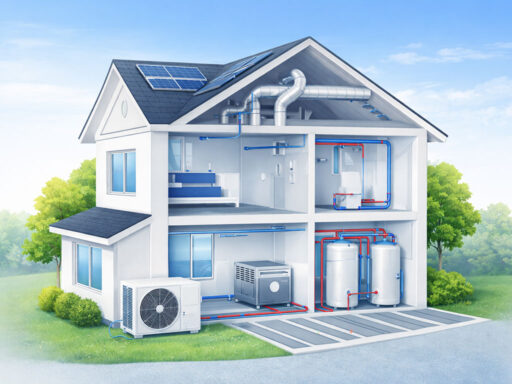
Today, technologies such as solar thermal, solar PV, air-source and ground-source heat pumps, and geothermal loops are transforming how commercial buildings generate and distribute thermal energy. This article explores how these renewable systems integrate with HVAC and plumbing installations, and how businesses can leverage them to reduce operating costs and environmental impact.
Table of Contents
Solar thermal for hot water and heating
Solar thermal systems offer one of the most efficient ways to harness renewable energy for hot water production and low-temperature heating. These systems use solar collectors to convert sunlight into thermal energy, which is stored in buffer tanks and transferred through heat exchangers.
Solar thermal energy can be used to:
- preheat domestic hot water (DHW)
- support radiant floor systems
- assist low-temperature boiler circuits
- improve total system efficiency in hybrid configurations
Solar thermal is particularly effective in:
- hotels and hospitality facilities
- multi-family residential buildings
- commercial buildings with high DHW demand
Trends across Europe show a growing adoption of solar hot water systems, especially in buildings seeking to reduce energy bills and improve their sustainability credentials.
Heat pumps and geothermal integration
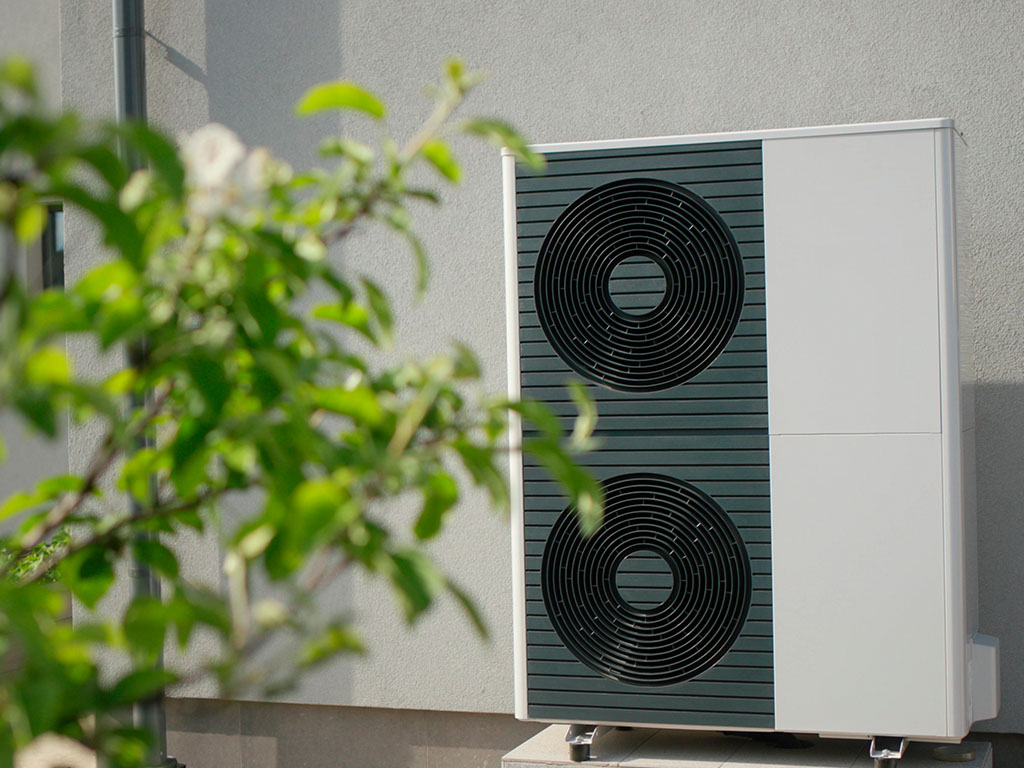
Modern heat pumps, both air-source (ASHP) and ground-source (GSHP), enable highly efficient heating and cooling using renewable energy extracted from the outdoor air or the ground.
Ground-source systems, in particular, use geothermal loops to tap into stable underground temperatures, ensuring excellent performance year-round.
Common renewable integrations include:
Heat pumps + geothermal loops
Ideal for buildings with suitable land availability, offering stable efficiency and reduced operating costs.
Heat pumps + solar PV
Solar photovoltaic systems generate electricity that can be used to power the heat pump, creating a highly efficient and fully renewable heating and cooling strategy.
A typical example:
One office retrofit combined rooftop solar PV with a modern heat pump, cutting heating costs by nearly 50% while reducing dependence on fossil fuels.
These combined solutions are increasingly chosen in B2B settings due to their scalability, efficiency, and compatibility with smart-building controls.
Hybrid systems and backup solutions
Many commercial buildings adopt a hybrid approach that integrates renewable sources with traditional backup systems. Typical configurations include:
- solar thermal + condensing boiler
- heat pump + gas boiler
- heat pump + electric backup
Smart controllers analyse outdoor temperature, energy prices, and system performance to automatically select the most efficient energy source at any given moment. This ensures:
- continuous comfort
- high system reliability
- maximum utilisation of renewable energy
- stable performance even during peak-load periods
Distributors and technical partners like AirEnergie play a key role in supporting installers in selecting multi-technology solutions that work seamlessly together.
Benefits and ROI for commercial buildings
Integrating renewable energy into HVAC and plumbing systems offers significant long-term advantages:
- lower energy bills
- reduced exposure to fuel price volatility
- higher energy independence
- improved sustainability performance
- eligibility for green building certifications (e.g., LEED, BREEAM, WELL)
Many EU countries offer tax credits, grants or incentives that help offset initial investment costs. As noted by many technical experts in the field, payback periods for solar-assisted heating solutions in industrial settings typically range from 5–7 years, depending on consumption patterns and system configuration.
Challenges and considerations in renewable HVAC integration
Despite their advantages, renewable-integrated systems require careful planning. Key factors include:
- adequate roof or ground space for solar collectors or geothermal loops
- upfront investment for heat pumps, solar systems or hybrid controls
- the need for specialised design and installation skills
- compatibility with existing HVAC and plumbing infrastructure
Professional system design is essential to ensure that all components, renewable sources, backup systems, controls and distribution networks, operate in a coordinated and efficient way.
How to plan renewable integration
As energy prices fluctuate and sustainability targets tighten, now is an ideal time for businesses to evaluate renewable energy opportunities within their HVAC and plumbing systems. Organisations should:
- assess their building’s thermal loads
- evaluate space availability for solar or geothermal installations
- consider hybrid strategies for maximum flexibility
- calculate ROI and payback using incentives
- align renewable adoption with long-term sustainability goals
With the support of knowledgeable HVAC distributors, companies can design systems that are efficient, cost-effective and future-proof.
Would you like to explore renewable energy solutions for your HVAC or plumbing systems?
Contact the AirEnergie team of experts, we are at your disposal to support system configuration, product selection and technical guidance.