Businesses across Europe are facing increasing pressure to improve the efficiency, sustainability and operating performance of their heating systems. Rising energy costs, climate and decarbonisation targets, and the need to ensure reliable, low-carbon heating have made the choice between heat pumps and traditional boilers more relevant than ever.
Evaluating the right heating solution is not simply a technical comparison. It is a strategic decision for companies, designers, installers and facility managers looking to ensure long-term performance, reduce operational costs and align with regulatory requirements.
For professionals working with specialised HVAC distributors and technical partners like AirEnergie, selecting the correct technology mix has become essential to ensure both efficiency and system reliability.
This guide explores the core differences between heat pumps and boilers, analysing efficiency, costs, environmental impact and implementation challenges.
Table of Contents
Efficiency and performance: two fundamentally different technologies
Heat pumps and traditional boilers operate on entirely different principles.
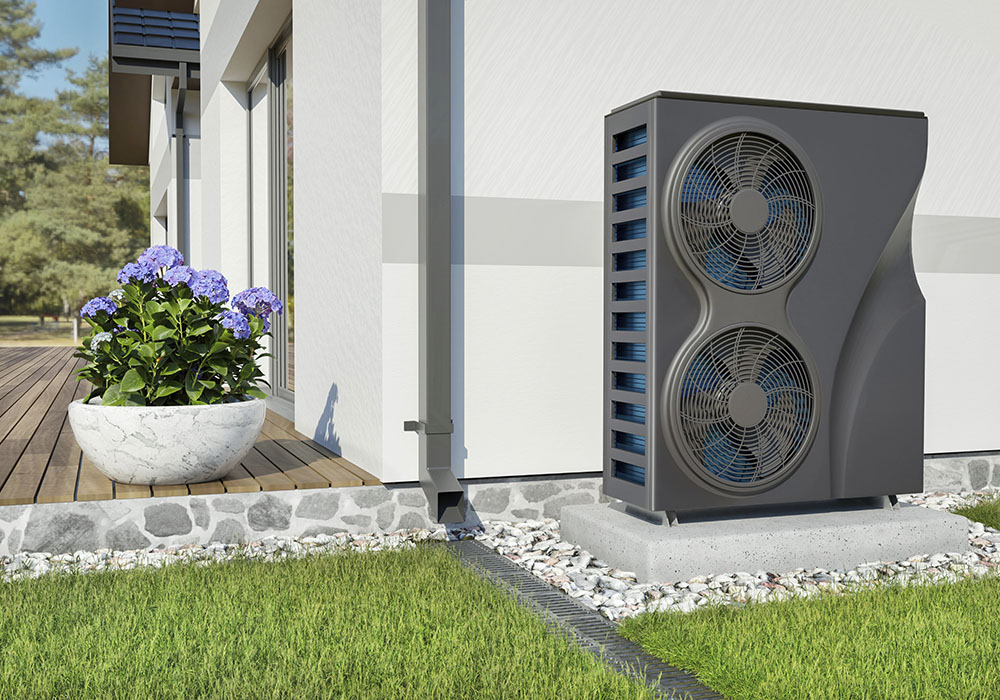
Heat pumps use electricity to extract heat from outdoor air, groundwater or the ground itself. This process allows them to achieve high seasonal performance values such as COP (Coefficient of Performance) and SCOP, often delivering more thermal energy than the electrical energy consumed.
Traditional gas or oil boilers, on the other hand, rely on combustion. Even high-efficiency condensing boilers are limited by the thermal efficiency boundaries of fossil fuels.
The efficiency gap becomes particularly relevant in commercial settings:
- Heat pumps offer stable performance in moderate climates and can cover heating, cooling, air conditioning and sometimes domestic hot water.
- Boilers may still have an advantage in very cold climates or high-temperature applications, where peak thermal loads require significant output.
Today, the growing adoption of hybrid configurations—heat pump + high-efficiency boiler—reflects a pragmatic approach: maximise renewable energy use while retaining peak-load reliability, a strategy increasingly supported by HVAC distributors providing multi-technology product portfolios.
Upfront investment and lifecycle cost analysis
When comparing heating technologies, businesses must evaluate installation cost, maintenance, operating expenses and the long-term return on investment.
Heat pumps generally have higher upfront costs, especially in commercial buildings requiring electrical upgrades, new infrastructure for outdoor units or integration with existing hydronic systems.
However, their operating costs can be significantly lower due to higher seasonal efficiencies and the possibility of using renewable electricity.
Traditional boilers often have lower initial costs and can be simpler to retrofit, especially in buildings already configured for gas or oil. Yet, boilers expose businesses to:
- fluctuating fuel prices
- higher operational costs
- stricter emissions regulations
In many EU countries, financial incentives and subsidies for heat pump adoption can substantially improve the payback period and overall ROI. HVAC professionals often rely on distributors with broad product availability to compare solutions and plan long-term investments efficiently.
Environmental impact and compliance with sustainability targets
Heat pumps are at the centre of Europe’s decarbonisation strategy. Because they can operate using renewable electricity, their carbon footprint is markedly lower than fossil-fuel boilers.
Traditional boilers, particularly those running on oil or older gas technologies, generate direct CO₂ emissions, which increasingly conflict with:
- national decarbonisation plans
- EU efficiency directives
- corporate ESG commitments
- sustainability frameworks in commercial real estate
Heat pumps, combined with renewable energy or integrated into smart-building ecosystems, offer a clear path to low-carbon heating, helping companies align with regulatory and environmental objectives.
For installation professionals, working with specialised HVAC suppliers ensures access to up-to-date, compliant technologies that support decarbonisation goals.
Implementation considerations for business and commercial environments
Choosing between heat pumps and traditional boilers requires a careful assessment of building characteristics, infrastructure readiness and operational requirements.
Key factors include:
- space availability for outdoor units or technical rooms
- electrical capacity, often needing upgrades in older buildings
- distribution system compatibility (e.g., radiators vs low-temperature terminals)
- retrofit constraints, especially in historical or complex facilities
- peak load management, which may require a hybrid approach
For many commercial buildings, a phased integration can be effective. As one industry expert notes, a heat pump can handle low-temperature heating demands while an existing boiler may be retained for peak loads or backup, ensuring continuity and operational resilience.
This staged approach is increasingly adopted by companies working with distributors capable of supporting both product selection and technical feasibility checks.
Use cases and when each solution makes sense
Heat pumps tend to be the preferred choice for:
- new commercial buildings designed for low-temperature heating
- moderate climates where heat pump performance remains optimal
- businesses pursuing net-zero strategies or ESG targets
- projects integrating renewable energy or smart-building automation
Traditional boilers may still suit:
- industrial environments requiring very high temperatures
- buildings with limited outdoor space
- retrofit scenarios where full system redesign is not feasible
- locations with low-cost natural gas
Hybrid heat pump–boiler systems increasingly represent the best compromise, delivering high efficiency alongside operational reliability under extreme load conditions, especially when supported by distributors offering multi-brand, multi-technology options.
How to choose the right heating strategy?
Heat pumps are becoming increasingly viable for the commercial and industrial sectors, especially as energy prices, regulation and corporate sustainability goals converge.
However, the optimal solution depends on building characteristics, operational profiles, budget and long-term efficiency targets.
Businesses evaluating their next heating investment should take a structured approach:
- analyse lifecycle costs, not only installation costs
- assess the building’s real thermal loads
- consider hybrid solutions for flexibility and risk mitigation
- align technology choices with corporate sustainability objectives
Those who act today, by modernising… will be better positioned to ensure efficient, low-carbon and future-proof heating in the years ahead.
Would you like to explore whether heat pumps, boilers or a hybrid solution is best for your business?
Contact the AirEnergie team of experts, we are at your disposal to support product selection, system configuration and technical guidance.